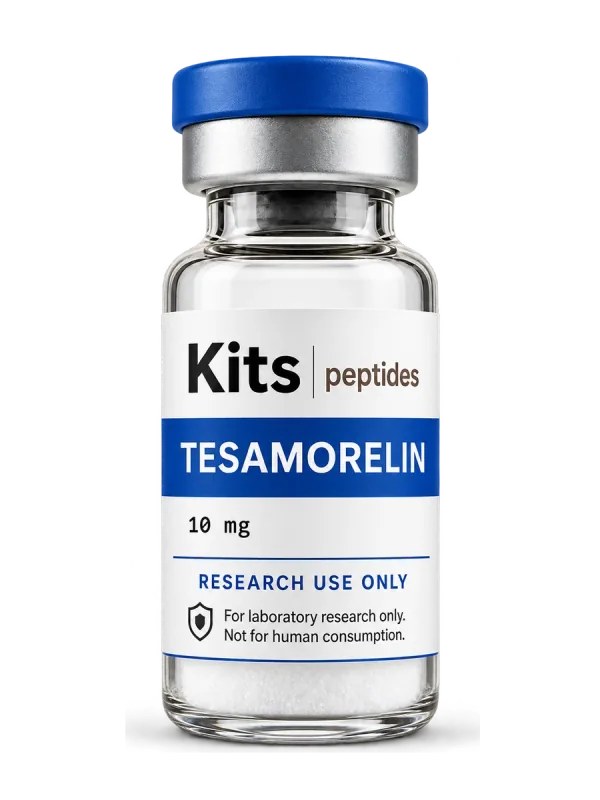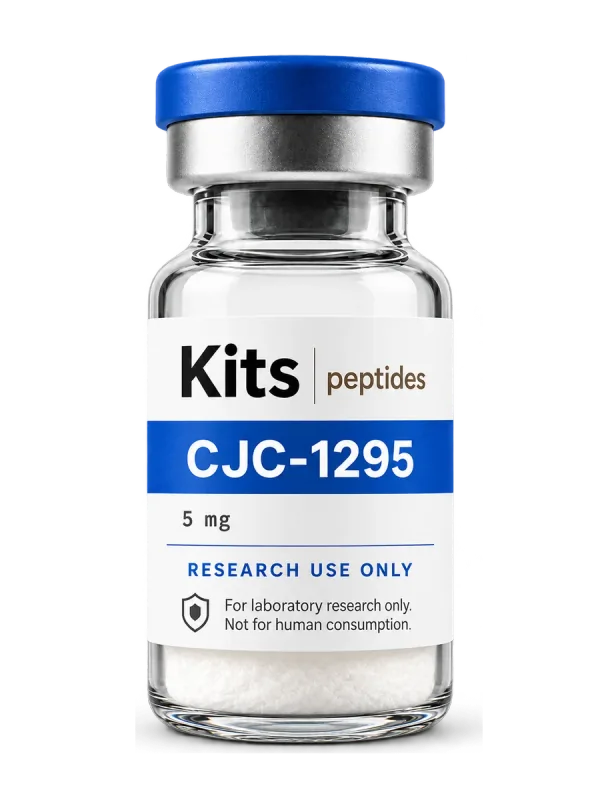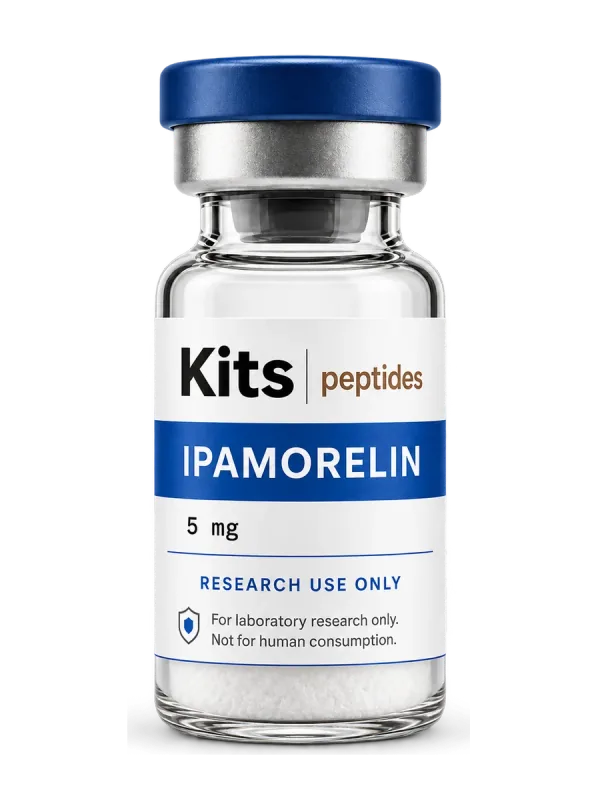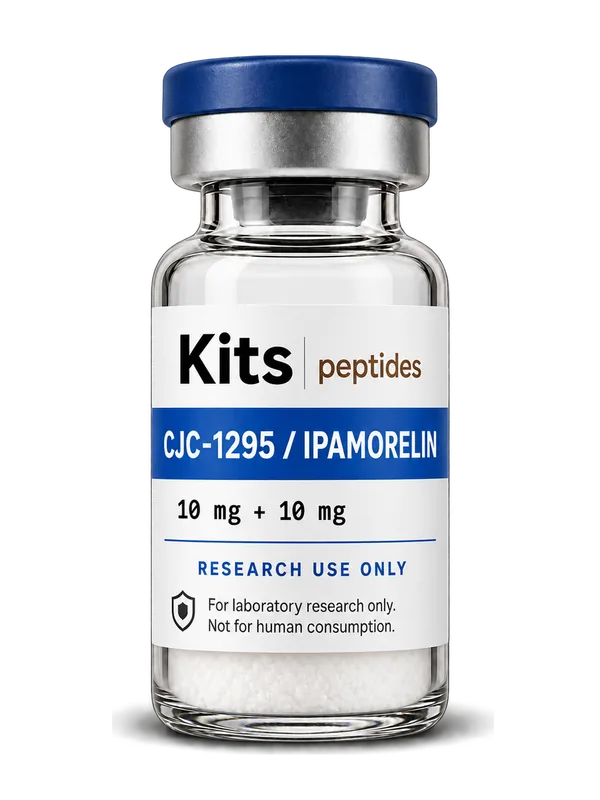
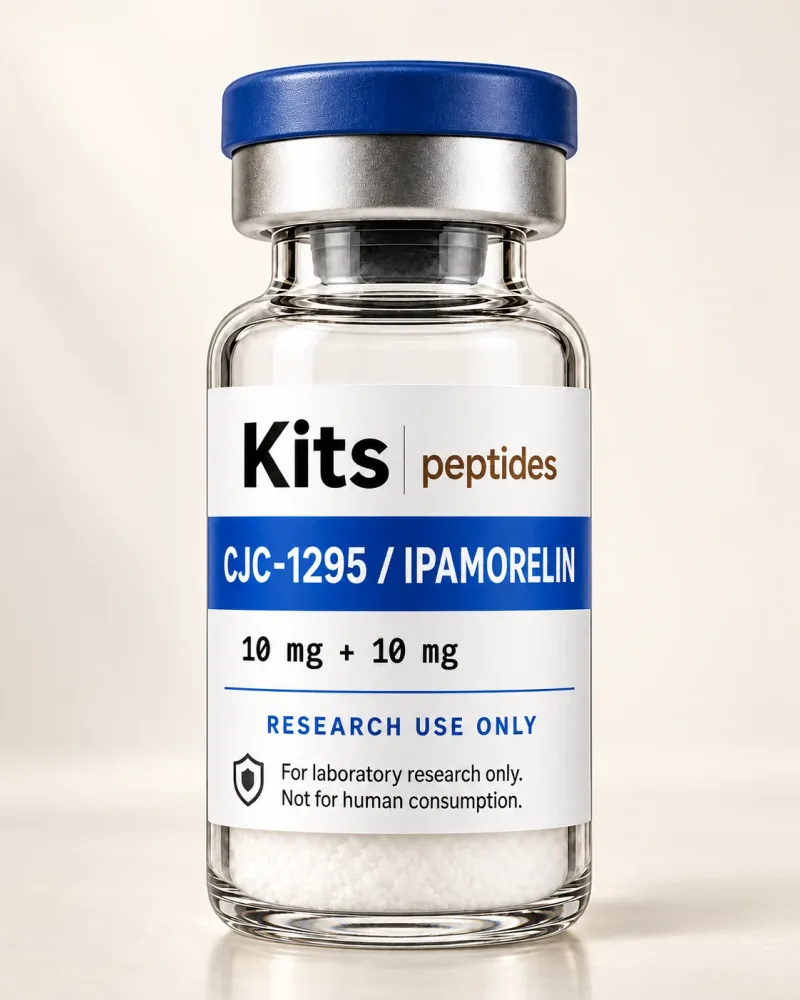
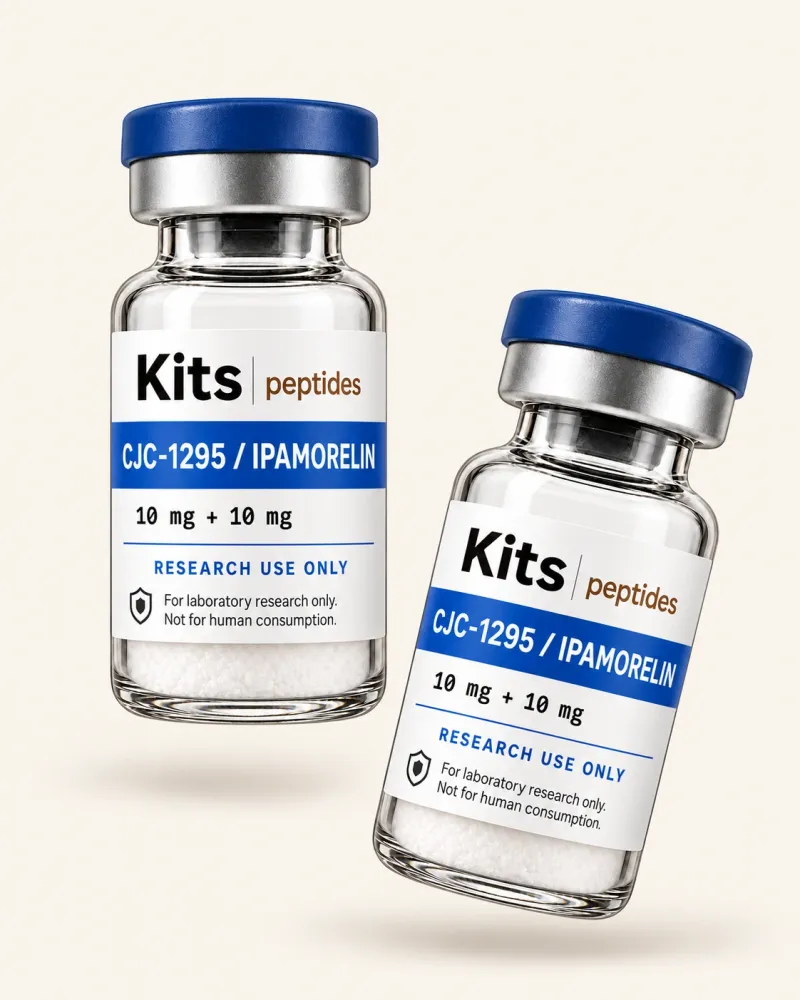
Reference photo; the label strength may differ from the size you choose.
CJC-1295 (no DAC) + Ipamorelin blend
Each vial holds 10mg CJC-1295 (no DAC) and 10mg Ipamorelin, 20mg in total: twice the 5mg + 5mg blend most stores sell.
+ tracked shipping from CA$19.99 · free over CA$99.00 in BC, CA$150.00 elsewhere. Sold as a laboratory reagent. Not for human or veterinary use.
Ordering in quantity, or need a size that is not listed? Request a wholesale quote
5.0 stars on GoogleMolecular data
- Sequence
- Physical blend of CJC-1295 no-DAC (mod GRF 1-29, CAS 863288-34-0) + Ipamorelin (CAS 170851-70-4); no single chemical identity (low-confidence identity, cas/formula omitted)
- Physical form
- Lyophilized powder
- Purity method
- HPLC
- Storage
- Lyophilized: store at -20°C, protect from light
Shipping & returns
Orders placed before 2pm PT on a business day ship the same day, tracked from Vancouver. Delivery options depend on your address and the stock you choose. Shipping details · Return terms
Customer reviews
Rated 4.7 out of 5
3 reviews
2 at 5 star, 1 at 4 star, 0 at 3 star, 0 at 2 star, 0 at 1 star
Sam O.
Rated 5 out of 5
sleep
Using it before bed. sleeping through the night for the first time in years. waking up before my alarm.
Erin G.
Rated 4 out of 5
Works but the timing rules are a pain, no food for a couple hours before. fine once you build the habit.
Tara N.
Rated 5 out of 5
Ran it 12 weeks alongside training. skin and sleep both better. recovery on heavy days was easier.
Reviews come from verified orders. Bought this? Your review link arrives by email after delivery.
Research overview
Kits Peptides is a Canadian research peptide supplier based in Kitsilano, Vancouver, BC. We supply the CJC-1295 and ipamorelin pairing, two growth hormone secretagogue analogues supplied together, for laboratory research use only, shipped tracked across Canada.
Each vial holds 10mg CJC-1295 (no DAC) and 10mg Ipamorelin, 20mg in total. CJC-1295 no-DAC, also listed as modified GRF (1-29), is a synthetic analog of growth hormone-releasing hormone (GHRH). Ipamorelin is a pentapeptide belonging to the growth hormone secretagogue class. This product places both peptides in a single vial as a co-formulated blend, pairing a GHRH analog with a GH secretagogue. Because it is a blend rather than a single molecule, it carries no individual CAS number, and each vial holds 10mg of peptide in total. Both peptides appear throughout the endocrinology and peptide chemistry literature, where GHRH analogs and secretagogue peptides serve as reference compounds for receptor and analytical studies. The CJC-1295 / Ipamorelin blend is referenced in the context of somatotropic axis research and comparative peptide work. That association is a matter of research topic, nothing more. Kits Peptides supplies the blend as a lyophilized powder for laboratory research use only. Every lot ships with a third-party certificate of analysis covering identity and purity, so independent testing is documented for each batch. We pack and ship orders tracked from our Vancouver facility to addresses across Canada. Anyone looking to buy CJC-1295 / Ipamorelin blend in Canada receives third-party tested reference material with per-lot documentation.
CJC-1295 no-DAC (mod GRF 1-29) and Ipamorelin are synthetic peptides that appear together in the endocrinology and peptide chemistry literature, where GHRH analogs and growth hormone secretagogues are referenced as research compounds. This co-formulated blend is supplied as a reference standard for laboratory research use only.
Information provided for research reference only. No claims are made regarding safety or efficacy for any use in humans or animals.
What this blend is
This product is a physical blend of two separate peptides in one vial: CJC-1295 without DAC, also called modified GRF 1-29 (CAS 863288-34-0), and ipamorelin (CAS 170851-70-4). It is a mixture, not a new compound, and it is paired because the two act through different receptor families, one at the GHRH receptor and one at the ghrelin receptor.
Because it is a blend, it has no single CAS number, no single molecular formula and no single molar mass, which is why the molecular data table on this page is deliberately incomplete rather than filled in with a value that would not mean anything. Each component has its own identity, listed above, and those are the numbers to check.
What a certificate can and cannot show for a blend
This is the part worth reading before you compare suppliers. A certificate of analysis characterises a sample against a named compound: purity is the main peak's share of total peak area for that compound, and identity is an observed mass matched to a theoretical one. Neither question has a single answer for a two-component mixture.
A meaningful certificate for a blend reports each component separately, and states the ratio between them, because the ratio is the one thing a buyer cannot verify by eye and the one thing that distinguishes one supplier's blend from another's. A single purity percentage printed against the blend name does not tell you what is in the vial. If a supplier shows you one number for a blend, ask which compound it refers to.
We do not currently commission testing in our own name for any product, blends included. Where a certificate exists for a production lot we received, it is linked on this page and on the lab results page, and it was issued by the laboratory named on it to our supplier.
What the research literature covers
There is no body of literature on the mixture itself. The published work is on the two components separately: modified GRF 1-29 as a GHRH receptor agonist, and ipamorelin as a selective agonist at the ghrelin receptor GHS-R1a.
Studies that examine a GHRH analogue together with a secretagogue generally combine them in the experiment rather than pre-mixing them, and report the two agents individually. The individual product pages for each component describe that literature.
The findings above come from animal, cell and in-vitro models rather than from controlled trials in people, and this blend is not an approved medicine in Canada. What we supply is a laboratory reagent, not for human or veterinary use.
Kits Peptides supplies this blend as a laboratory reagent. Describing this literature is not an offer of it for any purpose studied in that literature, and nothing on this page is guidance for use in humans or animals.
What is in the vial
The blend is supplied as a lyophilized (freeze-dried) powder in a sealed glass vial. The label carries the compound name, the nominal mass in milligrams, our batch code and the research-use statement. Because two peptides share the vial, the label mass refers to the combined content; the split between components is the supplier's specification rather than something visible in the powder.
Vials ship unopened. Store as the label directs on arrival; the storage guide in the research library covers the general handling of lyophilized peptides. Bacteriostatic water is sold separately as a supply item and is not included unless your order lists it.
Sizes and availability
The blend is sold out at present, and six people are currently on its waitlist, more than for any other single size we carry. The waitlist button records your email against the exact size and emails you automatically when a lot lands, before any other announcement.
How this lot is documented
Each order records the batch that filled it, and the batch code is printed on the vial label. Where a third-party certificate of analysis exists for the production lot of this blend we received, it is linked in the certificate section above and on the lab results page.
Read those certificates for what they are: they were issued by the laboratory named on them to our supplier for that production lot, and our batch code is the internal receipt reference we assign, so it does not appear on the PDF. We do not currently commission testing in our own name, and product titles make no purity claim for lots without a certificate. The lab standards page explains the full position.
Shipping from Vancouver
Every order is packed in Kitsilano, Vancouver and ships domestically. Nothing crosses a border, so there is no international transit and no customs hold.
Metro Vancouver addresses can choose same-day courier delivery, priced by distance from our dispatch point; the cutoff for same-day is shown at checkout once you enter a postal code. Everywhere else in Canada ships tracked Canada Post, with the tracking number on your confirmation page and on the order tracking page. Free shipping applies above the threshold shown on the shipping page.
How to order
Choose a size, add it to the cart and check out. Checkout records a short attestation that you are 19 or older and purchasing for laboratory research. Payment is by Interac e-Transfer, card, or cryptocurrency; the confirmation page shows the exact steps for the method you picked, and the same steps are emailed to you.
If a size shows as sold out, the waitlist button on that size emails you when it is back. Quantity discounts apply automatically above the subtotals listed on the shop page and do not stack with promo codes.
Common questions
- What is in this blend?
- Two peptides in one vial: CJC-1295 without DAC, also called modified GRF 1-29 (CAS 863288-34-0), and ipamorelin (CAS 170851-70-4). It is a physical mixture, not a single compound.
- Why is there no CAS number or molecular formula for this product?
- Because it is a blend of two molecules, so it has no single chemical identity. Filling in one number would be misleading. Each component has its own CAS number and formula, shown on their individual product pages.
- Can a blend have a certificate of analysis?
- Only a meaningful one if it reports each component separately and states the ratio between them. A single purity figure printed against a blend name does not say which compound it describes. Ask that question of any supplier showing you one number for a blend.
- Why are these two paired?
- They act through different receptor families: modified GRF 1-29 at the GHRH receptor, ipamorelin at the ghrelin receptor GHS-R1a. Studies examining both generally combine them in the experiment rather than pre-mixing.
- Is the blend in stock?
- Not at the moment, and it currently has the longest waitlist of anything we carry. The waitlist button emails you when a lot lands.
- Is this blend approved in Canada?
- No. Neither component is approved by Health Canada or any comparable regulator, and the blend is supplied as a laboratory reagent for research use only.
- Can I buy the components separately?
- Yes, both are listed individually in the catalogue when stocked, each with its own molecular data and certificate position.
- How do I pay?
- Interac e-Transfer, card, or cryptocurrency.